 The Walking Club
Your dog has a chew in the living room. You walk past, and they go still, hold it closer, or growl. Stop and give them space. Do not grab the chew, scold the warning, or invite someone to walk by again to see whether they repeat it.
For now, give chews in a quiet area behind a closed door or secure gate, away from children and other pets. Let the dog finish undisturbed. If the chew is dangerous or has been swallowed, call a veterinarian promptly for help rather than reaching into a guarding dog's mouth. If your dog has snapped or bitten, keep people safely separated and seek a veterinarian and qualified behavior professional. A new guarding response deserves a health check too.
Some dogs learn that a person approaching means a valued item is about to vanish. Repeatedly taking things away can deepen that worry. A professional can help you design a gradual plan based on how close people can safely be. In easier, non-guarding situations, you can teach a voluntary exchange with an item your dog can give up comfortably, then sometimes return it. This is not an invitation to practice over the prized chew or to test your dog's threshold.
Notice the room layout. If everyone must pass the dog to reach a doorway, even a relaxed dog may feel crowded. Move chew time to somewhere they won't be interrupted. The first successful change is not making the growl disappear, it is making the dog and household safer. For more on recognizing guarding and planning safe changes, see the resource-guarding guide. Do not test the dog by approaching their chew.
The growl is rarely the first signal. Watch for the quiet ones that come before it: eating or chewing faster when someone nears, freezing mid-chew, hovering the head or body over the item, a hard sideways stare, or going still. A dog guarding from other dogs shows the same quiet signals. These are your dog asking for space politely. Answer them by giving room, and you keep the conversation at whispers instead of shouts. When everyone in the household, including children, can spot these early signs, near-misses stop happening.
If you ever must get an item back, do not reach in. Toss a treat better than the chew a few feet away, let your dog leave the item to get it, and pick the item up only when your dog is busy elsewhere. Over easy, everyday items, you can practice a cheerful "drop it" trade, offering the swap and sometimes handing the item back, so giving things up predicts gain rather than loss. Skip the practice entirely over high-value chews or with any dog who has stiffened, snapped, or bitten. That dog needs a professional plan, and a barrier between training and teeth.
Choose what fits. Nothing is saved or submitted.
Sources: Dogs Trust: Resource guarding in dogs. American Veterinary Society of Animal Behavior: Grrr... This Lap Belongs to Me!. VCA Animal Hospitals: Food Bowl Aggression in Dogs.
This article is general education, not veterinary advice. If your dog seems unwell, is in pain, or something changed suddenly, call your vet. If it could be an emergency, do not wait.
The article is the start. The guide is the full method.
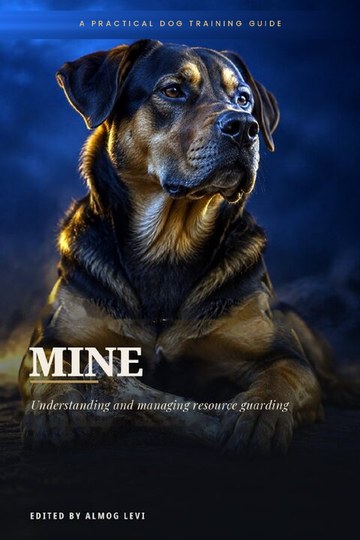 MineThe complete guide to guarding and growling · $9.99Read the guide →This guide is part ofThe Full House PackFive guides for everyone under your roof.
Describe your dog's problem and get the guidance that fits. No account needed to look.
Describe your dog's problem →